

The Supremacy of the Son of God
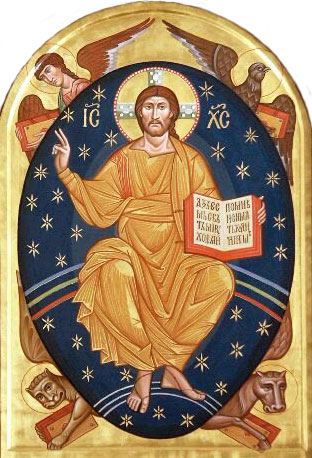
15 The Son is the image of the invisible God, the firstborn over all creation. 16 For in him all things were created:
Psalm 65
For the director of music. A psalm of David. A song.
1 Praise awaits[b] you, our God, in Zion;
to you our vows will be fulfilled.
2 You who answer prayer,
to you all people will come.
3 When we were overwhelmed by sins,
you forgave[c] our transgressions.
4 Blessed are those you choose
and bring near to live in your courts!
We are filled with the good things of your house,
of your holy temple.
5 You answer us with awesome and righteous deeds,
God our Savior,
the hope of all the ends of the earth
and of the farthest seas,
6 who formed the mountains by your power,
having armed yourself with strength,
7 who stilled the roaring of the seas,
the roaring of their waves,
and the turmoil of the nations.
8 The whole earth is filled with awe at your wonders;
where morning dawns, where evening fades,
you call forth songs of joy.
9 You care for the land and water it;
you enrich it abundantly.
The streams of God are filled with water
to provide the people with grain,
for so you have ordained it.[d]
10 You drench its furrows and level its ridges;
you soften it with showers and bless its crops.
11 You crown the year with your bounty,
and your carts overflow with abundance.
12 The grasslands of the wilderness overflow;
the hills are clothed with gladness.
13 The meadows are covered with flocks
and the valleys are mantled with grain;
they shout for joy and sing.
Footnotes:
Psalm 65:1 In Hebrew texts 65:1-13 is numbered 65:2-14.
Psalm 65:1 Or befits; the meaning of the Hebrew for this word is uncertain.
Psalm 65:3 Or made atonement for
Psalm 65:9 Or for that is how you prepare the land

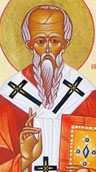 Irenaeus was an important second
century church father (130-200 AD). He was born in Smyrna in Asia Minor, where
he studied under bishop Polycarp, who in turn had been a disciple of John the
Apostle. He studied in Rome under Justin Martyr. Around 178 AD he was made
bishop of Lyons in Southern Gaul. In contrast to Justin - whose writings he used
and respected - Irenaeus rejected the philosophical approach to Christianity,
which for him "rested on revelation, tradition, and on the power of the Holy
Spirit." He did not entirely abandon philosophy and many of his works are
indebted to it. He saw his main ministry in refuting the heresy of the Gnostic
teachers.
Irenaeus is the first great theologian of the early church. His major work,
Against Heresies, written around 180 AD, was a refutation of Gnostic
errors. He exposed the absurdities of the Gnostic cults of the day and included
a strong presentation and defense of orthodox belief. His work is the earliest
compendium of Christian theology surviving from ancient times and is the first
work that cites virtually every book of the Christian writings that we now call
the New Testament.
Irenaeus was an important second
century church father (130-200 AD). He was born in Smyrna in Asia Minor, where
he studied under bishop Polycarp, who in turn had been a disciple of John the
Apostle. He studied in Rome under Justin Martyr. Around 178 AD he was made
bishop of Lyons in Southern Gaul. In contrast to Justin - whose writings he used
and respected - Irenaeus rejected the philosophical approach to Christianity,
which for him "rested on revelation, tradition, and on the power of the Holy
Spirit." He did not entirely abandon philosophy and many of his works are
indebted to it. He saw his main ministry in refuting the heresy of the Gnostic
teachers.
Irenaeus is the first great theologian of the early church. His major work,
Against Heresies, written around 180 AD, was a refutation of Gnostic
errors. He exposed the absurdities of the Gnostic cults of the day and included
a strong presentation and defense of orthodox belief. His work is the earliest
compendium of Christian theology surviving from ancient times and is the first
work that cites virtually every book of the Christian writings that we now call
the New Testament.
+-+Copy.jpg)
